Skip to content

Why it matters

What diverting waste from landfill actually does

Beyond the tonnage figure, rescued materials change how a city thinks about what it throws away.

By Wayne, 3 September 2026
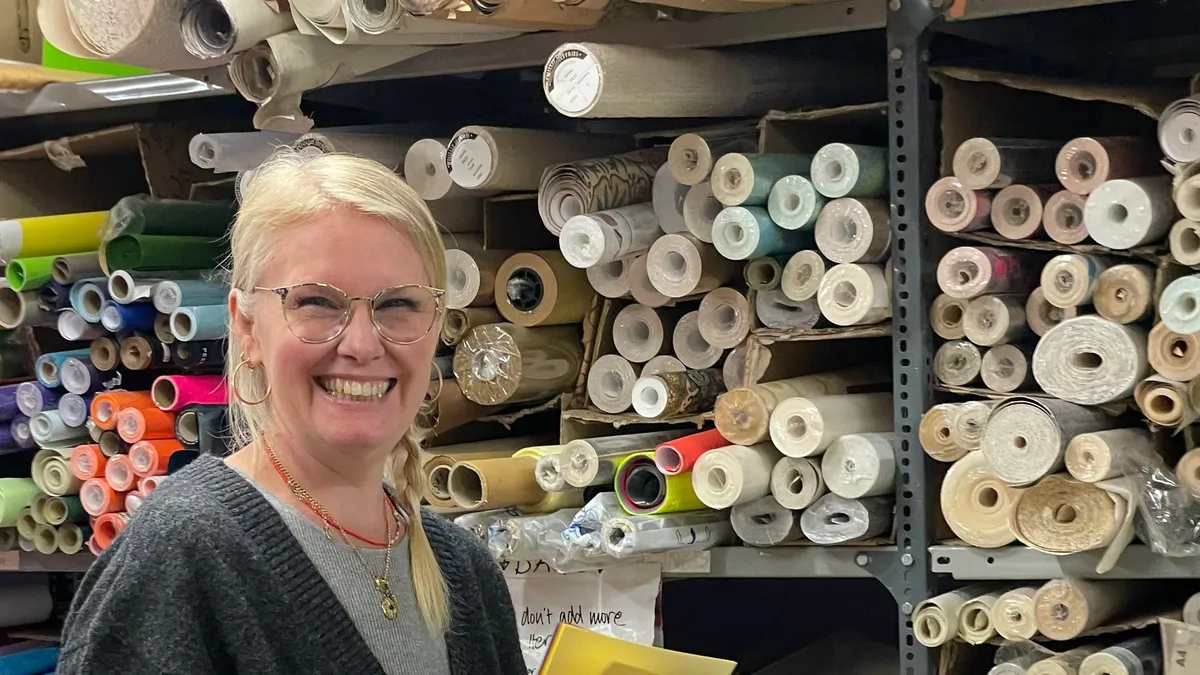
A volunteer sorting rolls of card and paper onto labelled storage shelves

Beyond the tonnage figure, rescued materials change how a city thinks about what it throws away.

We divert around 60 tonnes of material from landfill every year. It’s a number we’re proud of and careful with, because a number on its own doesn’t explain much. So here’s what rescuing materials actually does, at each end of the journey.

For the businesses that donate

Surplus costs money to get rid of. One events business that supplies flowers and plants told us they use the Scrapstore because it saves them money: after events, “taking them to landfill is not only wasteful but costly too”. Add the reputational value of being able to say your offcuts went to schools and artists rather than a hole in the ground, and donating surplus starts to look like the sensible option rather than the generous one. We like it that way. Generosity is lovely; a habit is better.

For the people who make with it

Rescued material arrives with a story and no instructions. A roll of card that was going to be packaging becomes a puppet theatre. Theatre scenery becomes a classroom display. The materials are good quality, often better than what a budget would normally stretch to, and they cost members very little. That’s the quiet trick of creative reuse: the same act that keeps something out of landfill is the act that puts it in a child’s hands.

For the volunteers who sort it

Every crate that arrives is sorted, checked and put onto the shelves by hand. Our volunteers give roughly 6,600 hours a year to that. One of them says simply that she enjoys sorting through waste, and we think she’s onto something: handling what a city discards teaches you very quickly how much of it never needed discarding at all.

For the wider circular economy

The circular economy used to sound like a niche idea. It’s mainstream now, and reuse sits at its most practical end. We don’t recycle materials into something else; we keep them exactly as they are and pass them to someone who wants them. It’s the shortest loop there is, and it’s been running in Tooting since 1988.

If your business has surplus

If you regularly finish jobs with usable materials left over, we’d like to hear from you. Tell us what you have and how often, and we’ll tell you what we can rescue.

In their own words

I love it because I can be creative, and I have all the tools to make beautiful things.

John, volunteer

Questions

Frequently asked

What materials do you accept?

Clean, safe, usable materials with creative potential: card, paper, fabric, plastics, foam, wood offcuts and the unexpected. Ask first for anything unusual.

Do you collect?

Get in touch and we'll discuss what's practical.

Join our newsletter

New stock and stories

New stock, what's on and stories, once a month. No spam, unsubscribe any time.

By signing up you agree to our privacy policy .

Keep reading

Read next

Ready to make something?

Registered charity 1041641 (opens in a new tab)Charity Commission registered (opens in a new tab)
Payments by Stripe
Green Mark accredited
Shortlisted, Wandsworth Business Awards 2025