Why it matters
What 60 tonnes of rescued materials looks like
Sixty tonnes a year is hard to picture. Here it is in double-decker buses, classrooms and Christmas mornings.
Wayne · 4 September 2026

What we do
Rescued materials make creativity affordable; creativity makes rescuing them matter. That's the whole idea, and it's worked since 1988.
The loop
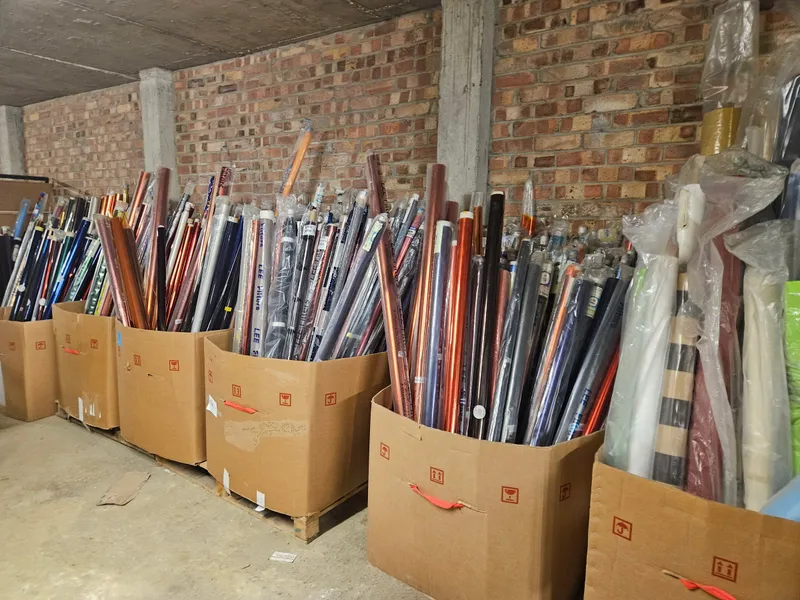
Local businesses hand us their surplus instead of paying to bin it: card, fabric, plastics, wood and more, collected by our volunteers at no cost to the business giving it.
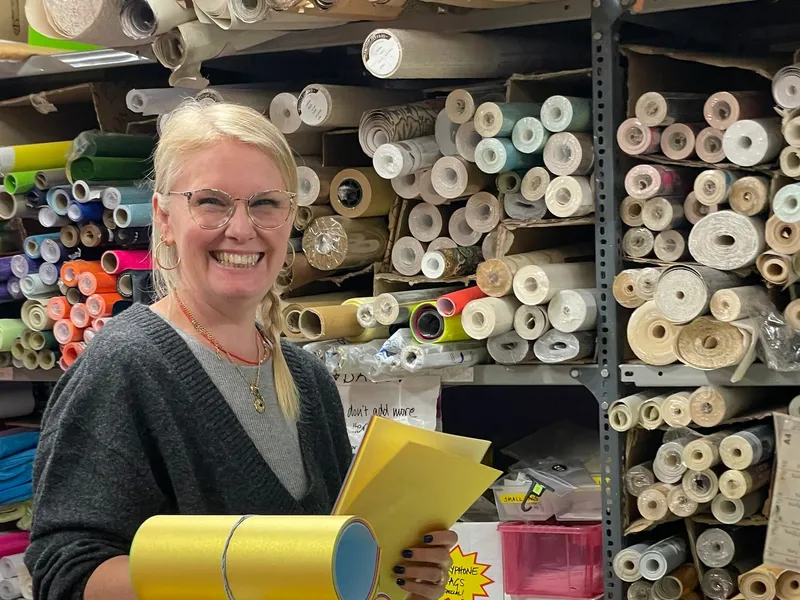
Every donation is checked by hand, sorted by type and packed onto the shelves by our volunteer team, ready for members to find exactly what they need when they visit.
Members browse the shelves on every open day, picking up rescued materials for a small charge or free, and volunteers are always on hand to help advise and guide.
What isn't wanted here goes back out to be used, not thrown away. Every item taken home is one less thing in a skip, and more creativity made possible.
Community
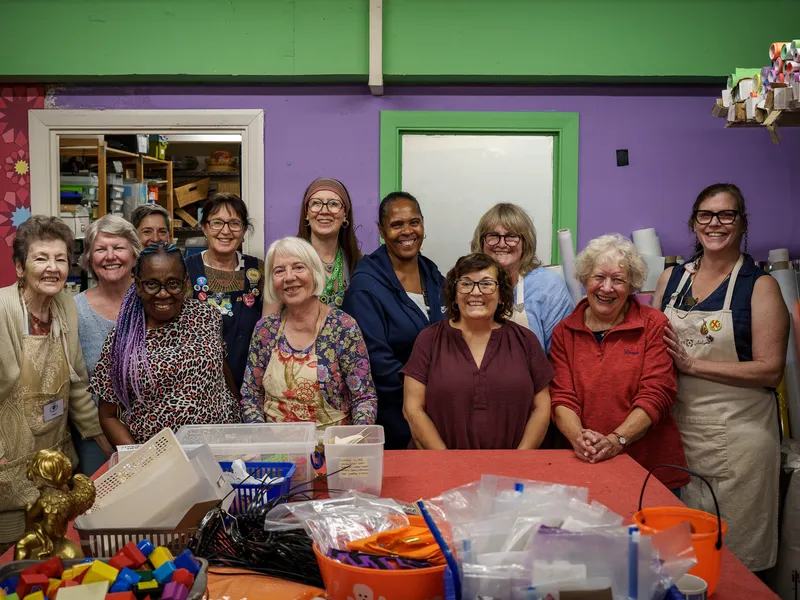
The Scrapstore is a room full of people as much as materials. On any open day you'll find nursery staff and grandparents, art students and theatre makers, regulars who've come for decades and someone who wandered in for the first time. Volunteers greet everyone by the door and know where everything is. People stay to talk, swap ideas and admire each other's finds. Whatever you make with what you take home, the store itself is a small, friendly community, and everyone is welcome in it.
I like sitting on reception and meeting people. It gets me out and gives me a sense of purpose.Joyce, volunteer
Education
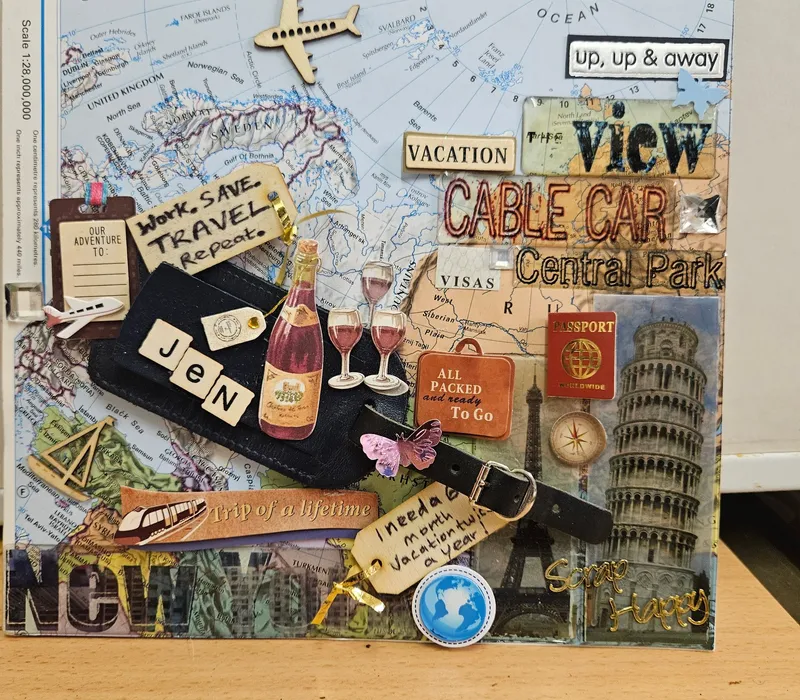
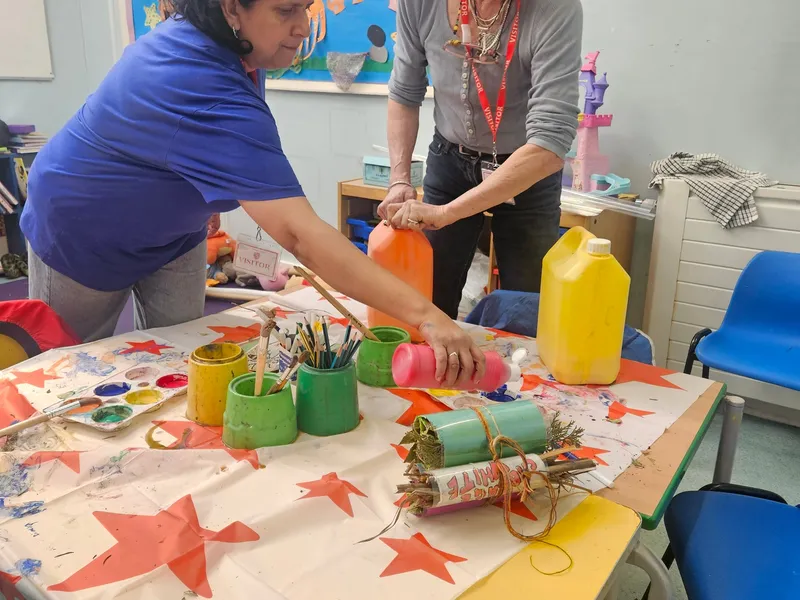
Learning happens here through making. Schools, nurseries, childminders and home-educating families use rescued materials to teach design, textiles, engineering and art: most of what you see is free to members, with a small charge for a few items, and pupils learn something else along the way, that a roll of card from a print run or fabric from a fit-out still has a life in it. Our volunteers teach each other too, from sorting and display to the small skills of running a busy open day.
Such a wonderful place. Staff are friendly and welcoming, nothing is ever too much trouble, and they always go the extra mile to make sure you're OK and have what you need.Fatima, Garratt Park School
Connection
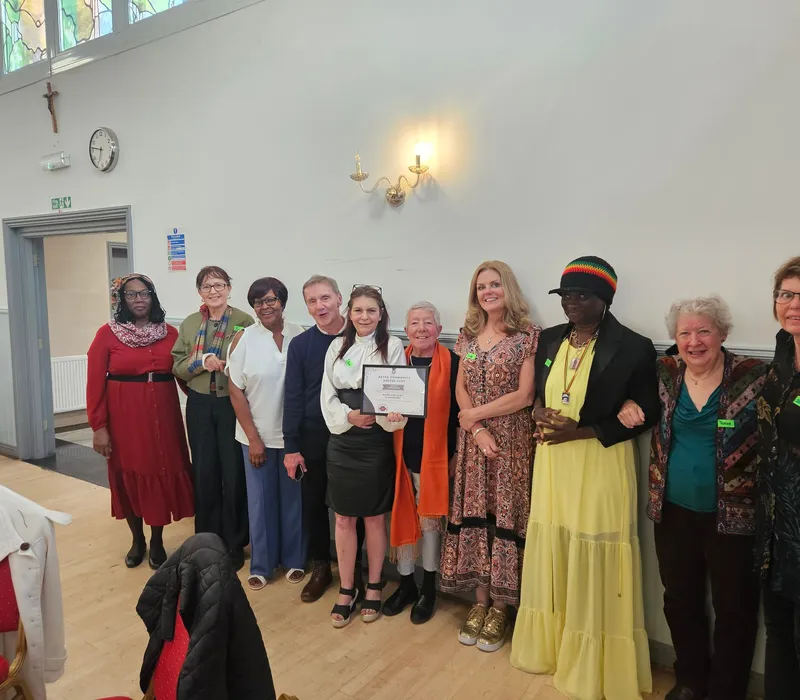
None of this works alone. Businesses across London give us their surplus rather than paying to dump it, and we give it a second life. Schools, charities and community groups join as members and put it to use. Other scrapstores share the same purpose. We are exploring how scrapstores across the country can work together. Every connection in that chain keeps materials moving from where they aren't wanted to where they are, and every new one means more rescued and more made.
We use the Scrapstore as it saves us money. After events the flowers need to be disposed of straight away; taking them to landfill is not only wasteful but costly too. And I am always greeted with a smile.Charlie, Veneers Carter, donating supplier
Circular economy
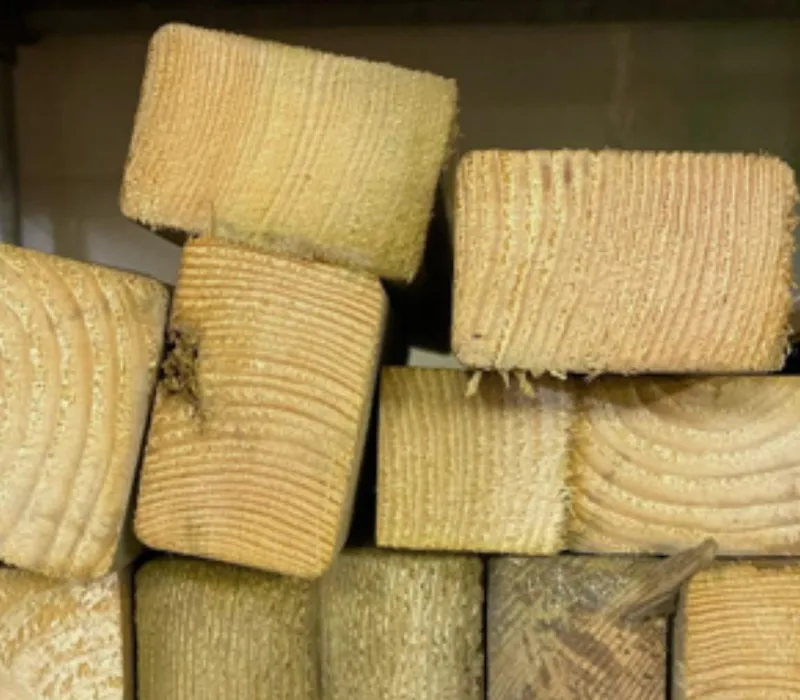
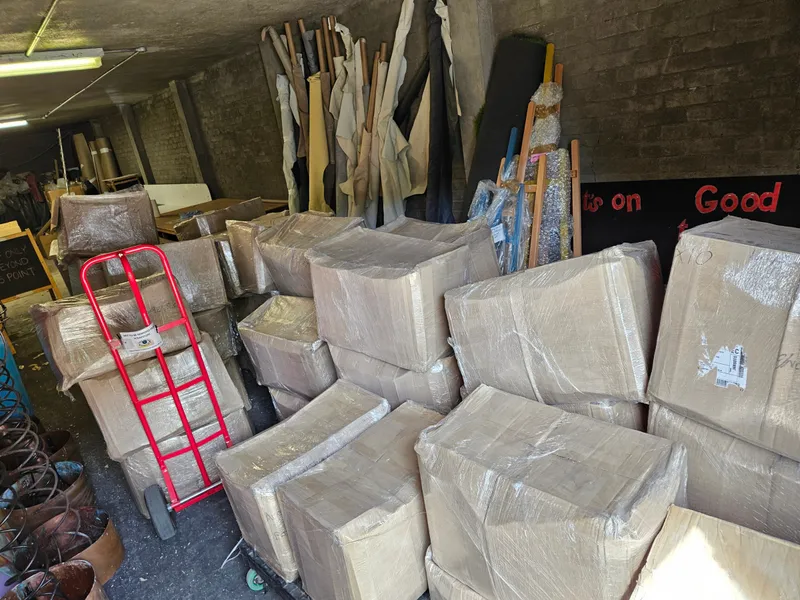
The circular economy used to sound like a niche idea. It's mainstream now, and reuse is its most practical end. We don't turn materials into something else; we keep them exactly as they are, placed on the shelves by volunteers, and hand them to someone who wants them. That's the shortest loop there is, it costs almost nothing to run, and it has been running on the Hazelhurst Estate since 1988. Around 60 tonnes a year passes through it.
A story
Glimmer Theatre, a community theatre company run by Andy Brock and Tamara Astor, uses the Scrapstore for costumes, props and scenery.
They describe it as a "magical, mythical place" providing "incredible materials, that would otherwise end up in the bin".
Their philosophy is "rich theatre by little means", and around 500 people have seen their work since they first visited the Scrapstore.
We love the Scrapstore.Andy Brock and Tamara Astor, Glimmer Theatre
Where we're heading
We are making it easier to join and to renew, online.
We are bringing workshops and teaching back, with places funded so cost excludes nobody.
We are working with more businesses to rescue more material.
We are growing and better supporting our volunteer community.
We are measuring our impact properly, and publishing it.
We are exploring how scrapstores across the country can work together.
We are planning to open new sites across London.
Read our blog
Sixty tonnes a year is hard to picture. Here it is in double-decker buses, classrooms and Christmas mornings.
Wayne · 4 September 2026
Beyond the tonnage figure, rescued materials change how a city thinks about what it throws away.
Wayne · 3 September 2026
In a city that sells anything you can name, the most useful shelf might be the one full of things nobody meant to sell.
Wayne · 2 September 2026
Screens are everywhere, and a pair of scissors and a box of rescued fabric still does something nothing else can.
Wayne · 1 September 2026